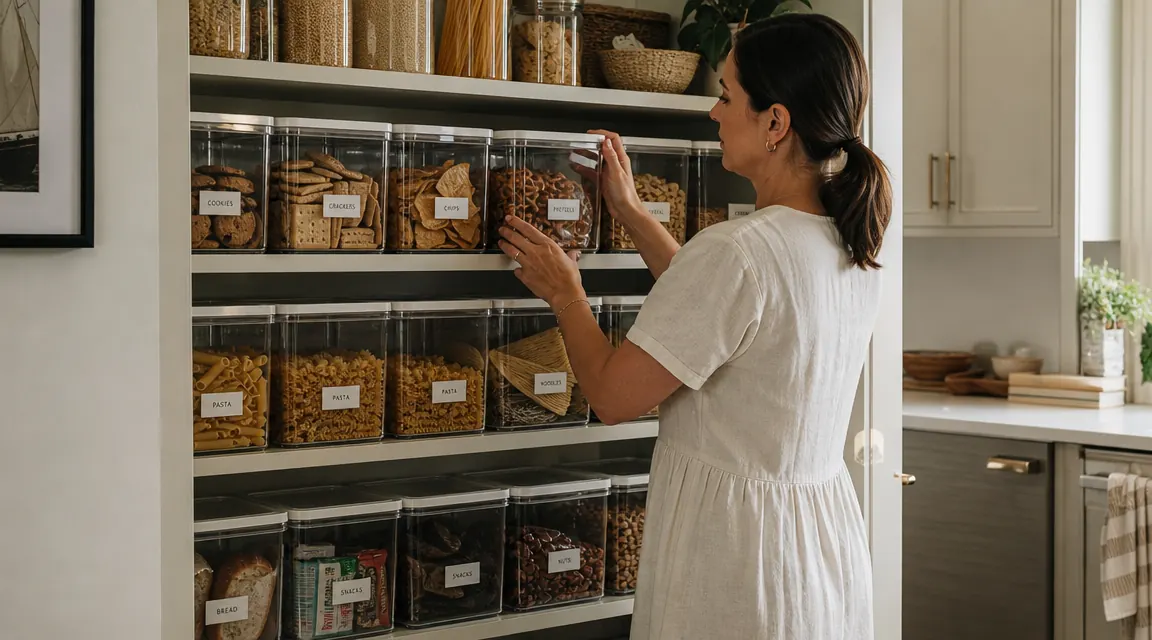
About fourteen months ago I stood in front of my pantry shelf and felt that specific kind of irritation that comes from a space that should be functional but isn't. Bags of crackers tipping into each other, a rogue granola bar falling every time I reached for something in the back, and three half-empty bags of pasta that I kept buying more of because I couldn't see what was already there. I had been through two sets of fabric bins, one wire basket system, and a very disappointing experience with a 'pantry kit' I found at a discount store. None of it stuck. What finally fixed it was a 12-pack of Sterilite 6-quart clear bins, and I want to tell you exactly what a year of living with them looks like.
I'm Dana. I've moved my family through five rentals and now a house, and I've organized every kitchen, pantry, and closet in all of them. I measure before I buy, I return things that don't work, and I have strong opinions about what 'budget storage' actually means. These bins earned their spot, but they are not perfect, and I'm going to tell you both sides.
The Quick Verdict
The best value-per-bin I've found for small pantry shelves, but the snap lids are a real weak point after heavy daily use and the sizing rules out anything taller than a soup can.
Amazon Check Today's Price →Your pantry is one afternoon away from actually staying organized
The Sterilite 12-pack ships in one order and gives you enough bins to tackle a full shelf system at once. At current pricing, it's the lowest cost-per-bin I've seen for a clear stackable set that actually stacks.
Amazon Check Today's Price on Amazon →How I've Used These Bins Over the Past Year
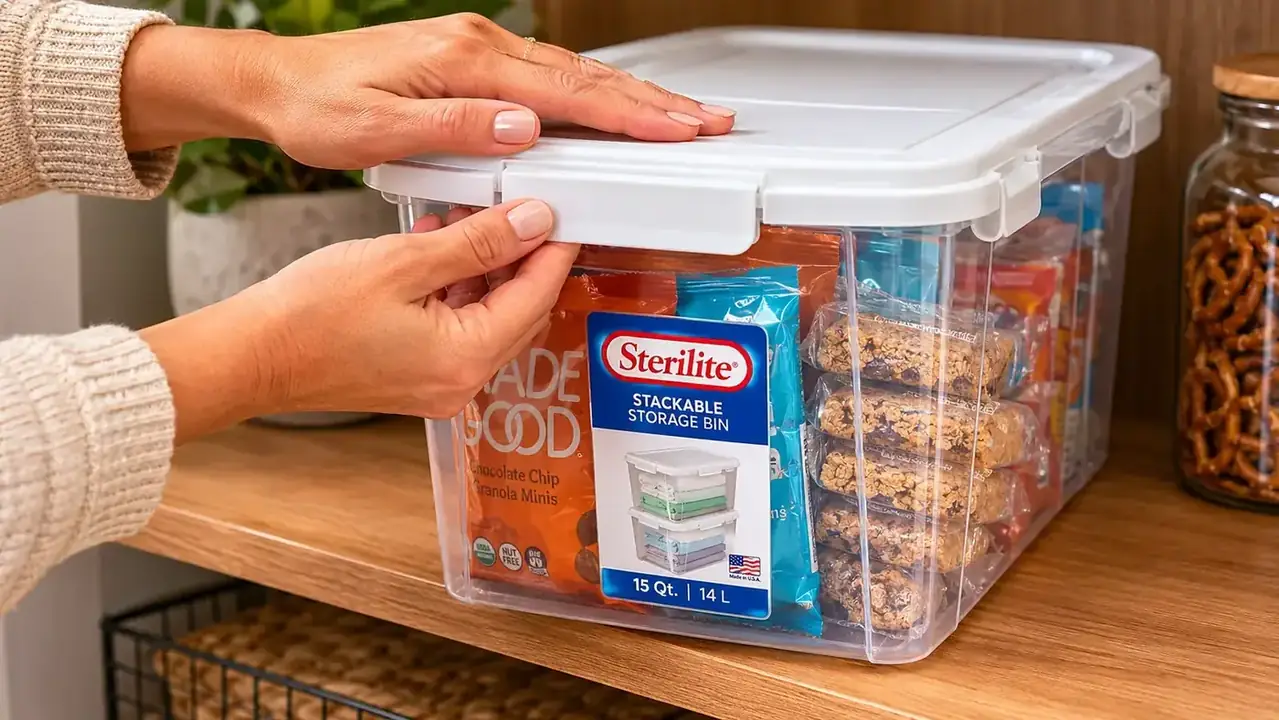
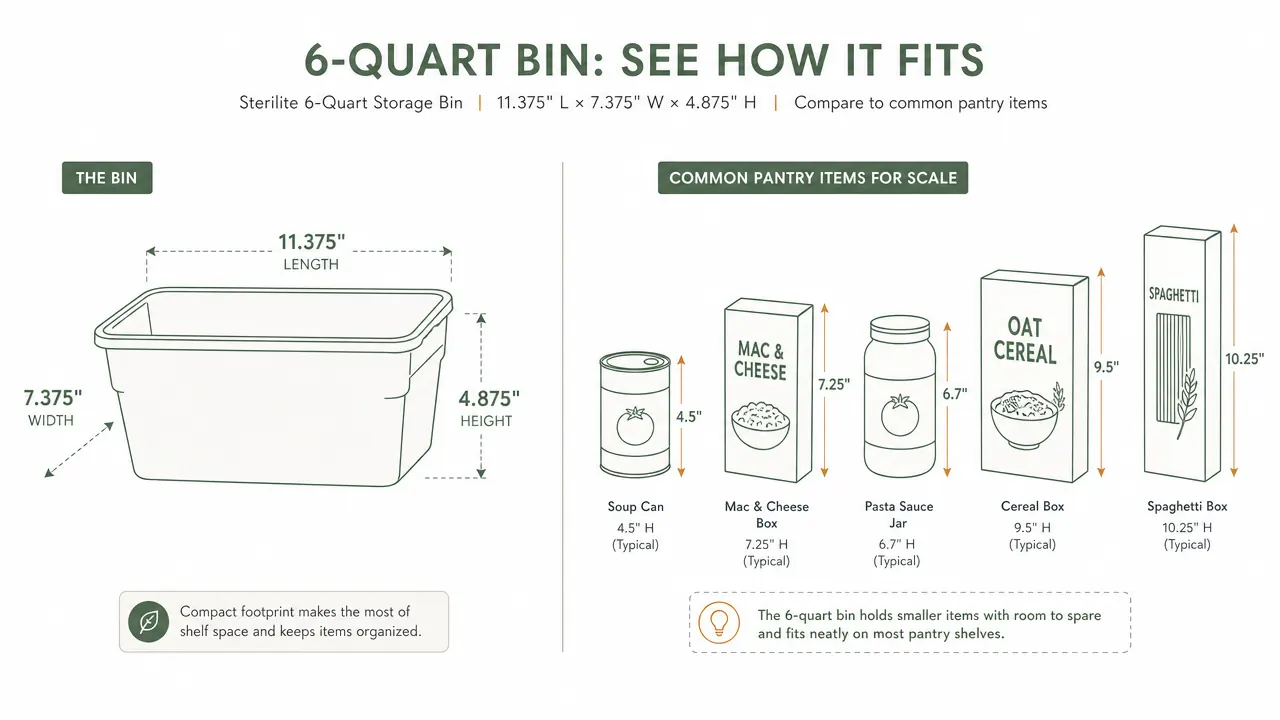
When the box arrived I did what I always do: I measured. The Sterilite 6-quart bins are 11.375 inches long, 7.375 inches wide, and 4.875 inches tall. That height is what makes them work on a pantry shelf that has 6 inches of clearance between shelves. I slid them in with about an inch to spare, which is exactly enough to grab the lid. I put eight bins on the pantry shelf immediately and used masking tape labels on the front of each lid. The other four went into the kitchen cabinet above the stove for baking supplies: chocolate chips, sprinkles, food coloring, and the random collection of birthday candles that seemed to multiply every year.
For the first three months I used the pantry bins constantly, primarily for snacks sorted by kid. My oldest is 10, the middle one is 7, and the youngest just turned 5. Having a bin labeled with each kid's name meant they could grab their own snacks without pulling everything else down. I also put one bin on a lower shelf for school supplies that kept migrating into the kitchen, things like pencils, erasers, and those little pencil sharpeners that scatter shavings everywhere. That bin alone reduced my daily irritation by a measurable amount.
By month six, I had reshuffled the setup twice. One reshuffle happened because I changed how I shop, buying dried beans in bulk now instead of canned. The other was because two lids had developed cracks and I moved those bins to a shelf where the lids didn't need to stay shut perfectly. More on that in the tradeoffs section.
The Clarity Factor: Why Being Able to See Inside Actually Matters
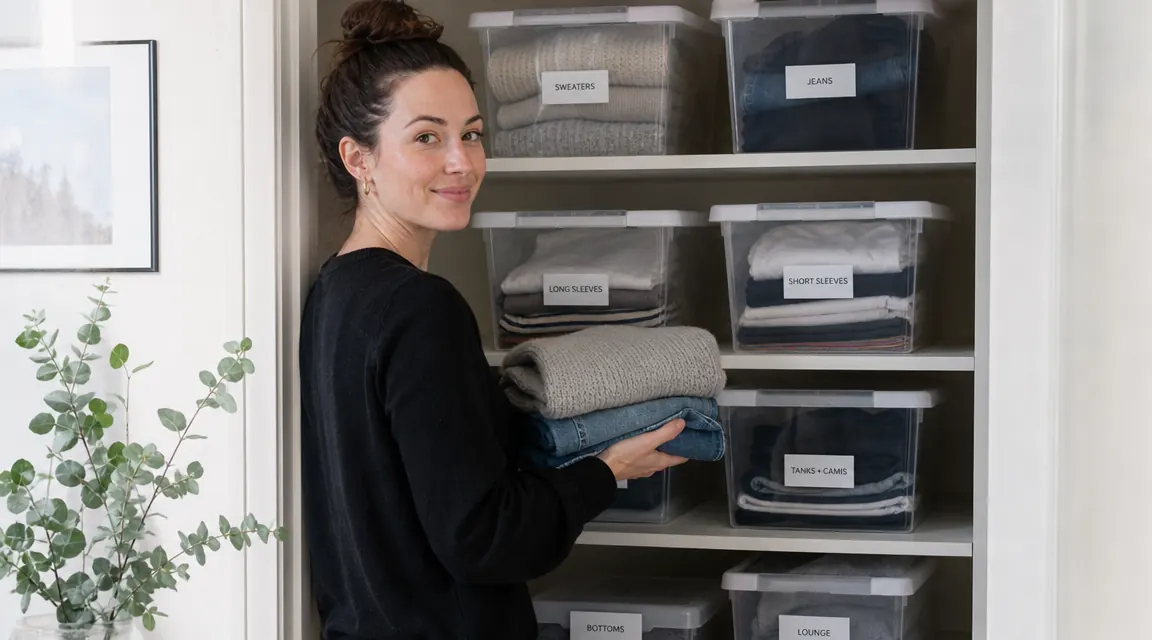
I know 'clear storage is better' sounds obvious, but I had underestimated how much it changes my actual behavior. With opaque bins or baskets, I would put things in and not interact with them again until I needed them, which meant I regularly forgot they existed. With these Sterilite bins, I can see at a glance that the trail mix is low, that there are still three protein bars in the bottom, or that someone put a candy bar back in the wrong bin. I stopped buying duplicates of things I already had. That alone justified the purchase.
The plastic clarity has held up well over fourteen months. There is no yellowing that I can see, no cloudiness from being washed repeatedly. I run the ones from the baking cabinet through the top rack of the dishwasher about once a month and they have stayed clear. The ones in the pantry I just wipe down with a damp cloth and they look the same as when they arrived.
Stacking: What Works and What the Listings Do Not Tell You
The bins stack because the lid has a slight rim and the base of each bin sits inside that rim. That is straightforward. What the listing does not tell you is the practical limit. I stacked three bins high on my pantry shelf and the bottom bin held the weight without any visible warping. Four high started to feel unstable when the bins were fully loaded, and I came home one afternoon to find the stack had shifted and knocked into the bin next to it. I now cap myself at three high when loaded, or four high if the top two bins are empty.
For a standard pantry shelf, two stacked bins fit comfortably under most shelf heights in the 9-to-12-inch clearance range. If your shelves are spaced closer than that, these bins work great as a single layer. If you have deep shelves (14 inches or more), you can put two bins front to back on the same shelf, which doubles your capacity without adding any height at all.
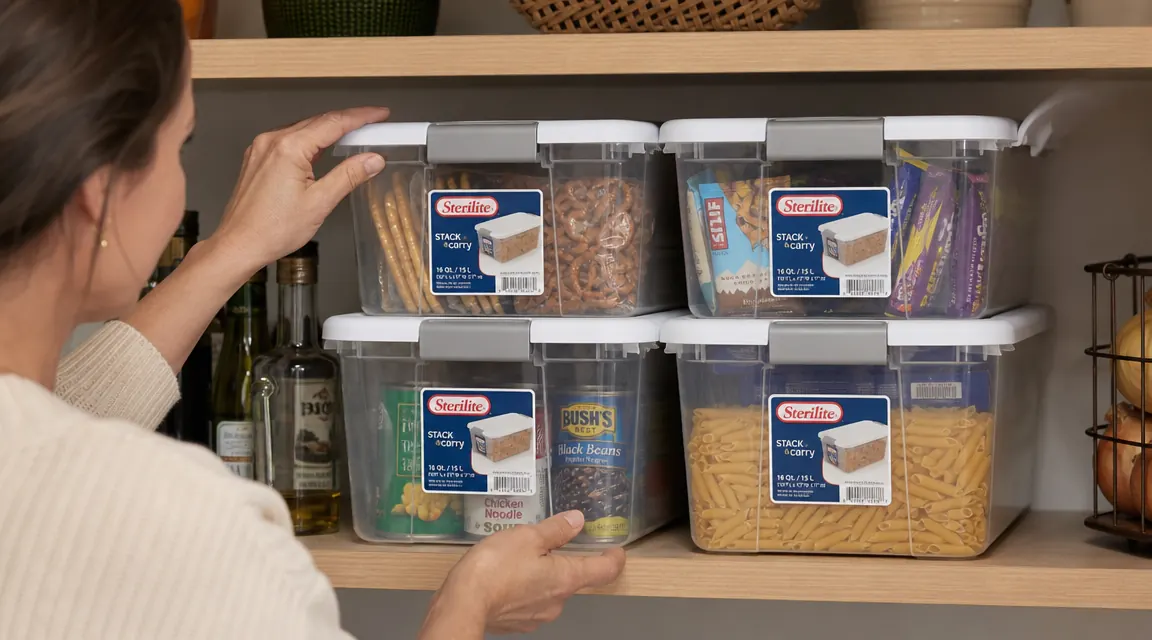
I stopped buying duplicates of pasta and crackers within two weeks of switching to clear bins. Visibility is not just aesthetic -- it changes what you actually buy at the store.
The Snap Lids: The One Part I Have Complaints About
Here is where I need to be honest with you. The snap lids were the biggest surprise, and not in a good way. Out of twelve lids, two developed hairline cracks within six months. One cracked at the hinge where the lid joins the body of the bin. The other cracked on the corner where the snap-down tab attaches. Neither crack affected the function of the bin itself, but both lids became slightly unreliable at staying closed.
I suspect both failures came from repeated snapping. My kids snap those lids open and shut more aggressively than I do, and plastic hinges have a finite number of cycles before they fatigue. If you are the only adult using these bins on a pantry shelf you access once or twice a day, I think the lids last much longer. If you have kids who are opening the snack bin six or eight times a day, plan for a cracked lid within a year.
The practical workaround: those two bins now hold pasta and dried beans, where the lid does not need a perfect snap because I am not opening them as frequently. The snap tabs still work on those bins, just not as crisply. It is a fine solution for low-traffic storage. Just do not rely on the lid to stay sealed for anything moisture-sensitive in a location that gets opened constantly.
Size Reality Check: What Fits and What Does Not
Six quarts is a specific size, and it is not a big bin. It is a single-category bin. A box of crackers fits with the lid on, barely. A standard 15-ounce soup can fits easily, and you can stand three or four cans side by side with room to see the labels. Snack packs, protein bars, tea bags, small spice jars, individually wrapped items, and condiment packets all work well. What does not fit: a full cereal box, a standard bag of flour, a large bag of coffee, or most chip bags unless you fold them down and clip them first. I knew this going in from the dimensions, but I have seen reviews from people who were genuinely surprised. If you want a bin that fits a cereal box standing upright, look at the Sterilite 16-quart or comparable alternatives with at least 7 inches of interior height.
The 6-quart size is honestly ideal for high-frequency, small-item pantry categories: snacks, baking add-ins like chocolate chips and nuts, condiment packets, school lunch additions, and single-serve pouches. It is not a bulk-storage bin. If you buy groceries in large quantities, you will want to pair these with a deeper bin for overflow.
Beyond the Pantry: Where Else I Ended Up Using These
After month three I started putting bins in other places. Two live in the bathroom cabinet now, one for first aid supplies (bandages, thermometer, cold medicine, nail scissors) and one for the kids' bathroom overflow supplies like spare toothbrushes and travel-size shampoos. Pulling out the whole bin when someone has a cut is faster than digging through a cabinet with five people's things shoved in it. Two more bins went into the craft closet for small supplies like tape, glue sticks, and scissors. One bin holds all the phone charging cables that used to live in a drawer and tangle themselves into a knot every single week.
This is where I want to mention my full guide on organizing any closet with clear bins, because the same principle applies everywhere in your home: when you can see it, you use it. When you can stack it, you free up horizontal space. The 12-pack is designed so you have enough bins to outfit multiple rooms at once rather than solving one shelf and leaving the rest of the house unchanged. That whole-home approach is what actually makes organization stick long term.
If you are weighing these against the IRIS alternative at a comparable price, I did a full side-by-side breakdown of exactly how they compare. Short version: Sterilite wins on overall value and stacking stability, but IRIS has a more satisfying lid mechanism. Worth reading before you commit to twelve of either.
Who These Bins Are For
These bins are right for you if you have a pantry, cabinet, or closet shelf where things constantly fall over, get lost, or duplicate because you cannot see what is already there. They work in rentals because nothing is mounted or drilled. They work in small spaces because the footprint is tight and the stacking is real. They work on a budget because the per-bin cost comes in low when you buy the 12-pack. If your main problem is small-item chaos on a shelf and you want a fix you can implement in one afternoon without a single tool, this is it.
Who Should Skip These
Skip these if you store anything that needs an airtight seal. The snap lids keep out dust and casual contact, but they are not airtight. I would not store flour, coffee, or long-grain rice in these bins with any expectation of freshness beyond a few weeks. Skip them too if your shelf height is under 5.5 inches because you will not fit the bin plus a comfortable grip on the lid. And skip the 6-quart if you shop in bulk and need bins that hold full-size bags or large containers. For all of those use cases, there are better tools. But for the pantry categories I described, I have not found a better combination of price, clarity, and stackability at this size.
What I Liked
- Clear plastic stays clear after a year of use and repeated dishwasher cycles
- Dimensions work perfectly on tight pantry shelves with as little as 6 inches of clearance
- Stacks stably up to three high when fully loaded
- 12-pack pricing makes it affordable to outfit multiple shelf locations in one order
- Works everywhere without drilling, mounting, or any modifications
- Seeing contents from any angle changes shopping behavior and reduces duplicate buying
Where It Falls Short
- Two of twelve lids cracked within six months under daily kid use
- 6-quart size is too small for cereal boxes, standard chip bags, or bulk dry goods
- Snap lids are not airtight and should not be used for long-term dry goods storage
- Stacks of four become unstable when all bins are fully loaded
If your pantry looks the same whether it is Monday or Saturday, the system is the problem, not you
The Sterilite 6-quart 12-pack is where I tell everyone to start with pantry organization. Buy the full set so you have enough to tackle a complete shelf in one afternoon. Check the current price on Amazon before you decide.
Amazon Check Today's Price on Amazon →