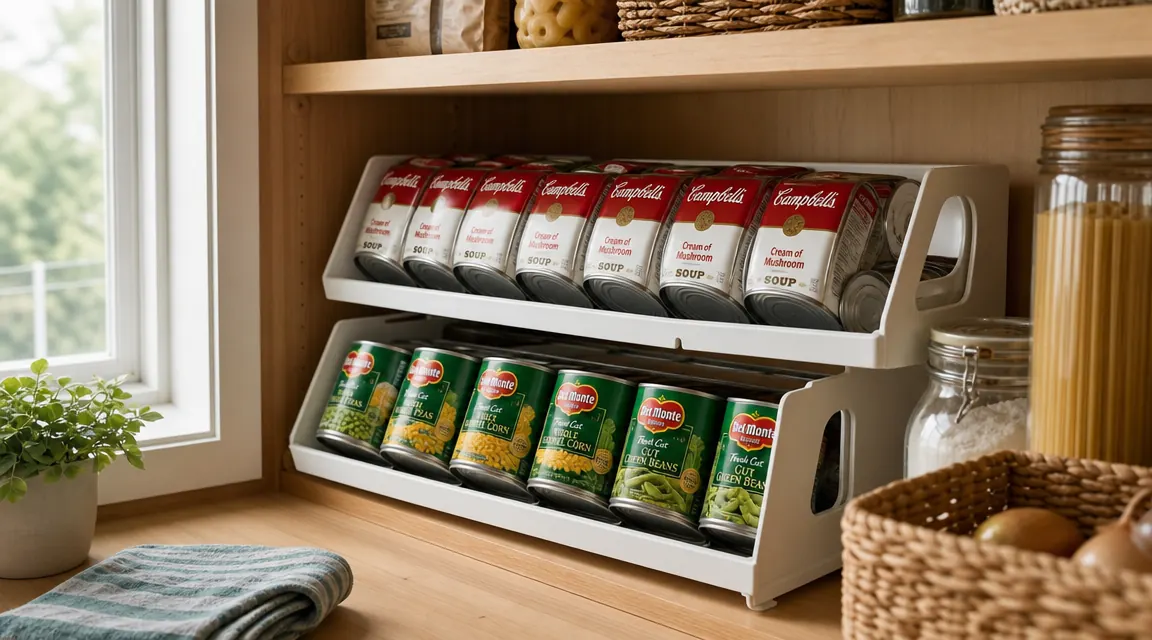
I measure pantry shelves before I buy anything. My current pantry is 14 inches deep and 28 inches wide, which is just enough space to make a mess if you are not deliberate about it. For the first three months I lived in this house, I kept soup cans and tomato cans loose on the bottom shelf. They rolled every time I reached for something. I once knocked four cans onto the floor in a single grab. That was the moment I started looking at can dispensers seriously, not as a nice-to-have but as a fix to an actual problem.
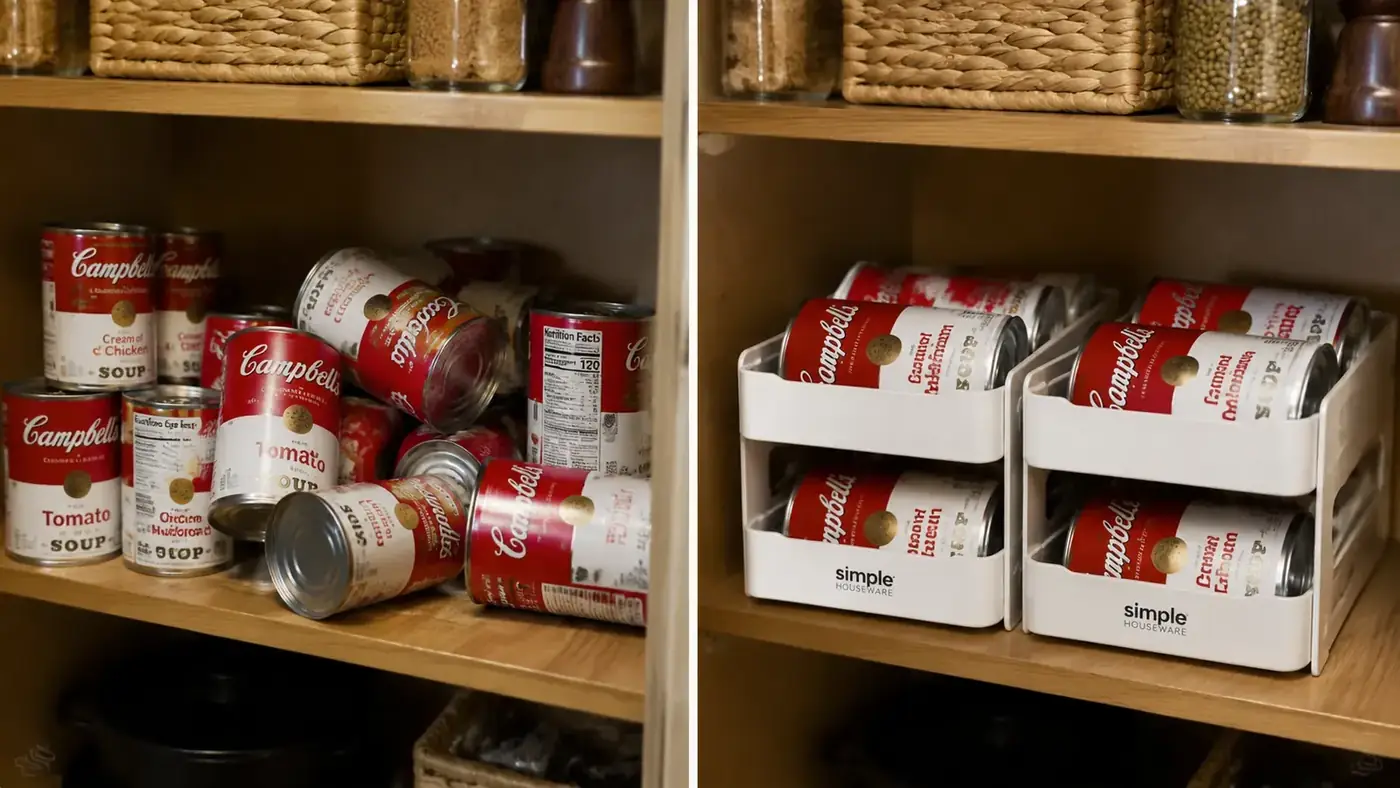
I ordered the Simple Houseware Stackable Beverage Soda Can Dispenser Organizer in the 2-pack, set both units up in the pantry, and later moved one into the refrigerator to test it there too. That was six months ago. I have been through three full restocks of soup cans, two restocks of diced tomatoes, and about a hundred and forty soda cans through the fridge unit. Here is everything I found.
The Quick Verdict
Solid gravity-feed rack that handles standard 15-oz cans and 12-oz sodas with no drama. The pantry setup is excellent. The fridge fit is tighter. Stacking above two units is where it gets wobbly.
Amazon Check Today's Price →Stop re-stacking cans every time you reach for one
The Simple Houseware 2-pack is currently available on Amazon. Fits most standard pantry shelves 12 inches deep or more.
Amazon Check Today's Price on Amazon →How I've Used It
Setup took less than ten minutes. The racks ship flat and assemble by sliding the wire rod through the end caps. No tools, no screws, nothing to worry about if you are renting. The assembled dimensions on each unit are roughly 15.7 inches long by 4.4 inches wide by 6.1 inches tall. My 14-inch-deep shelf fits them with about a half inch to spare at the back, which is exactly as snug as I wanted.
I stacked both pantry units one on top of the other, which the design supports. The bottom unit sits flush on the shelf. The top unit locks into the bottom via molded notches on the feet, which means the stack does not shift when you pull a can from the bottom. I loaded the back with the newer cans first and let gravity roll the older ones to the front. That is the whole FIFO setup. It actually works.
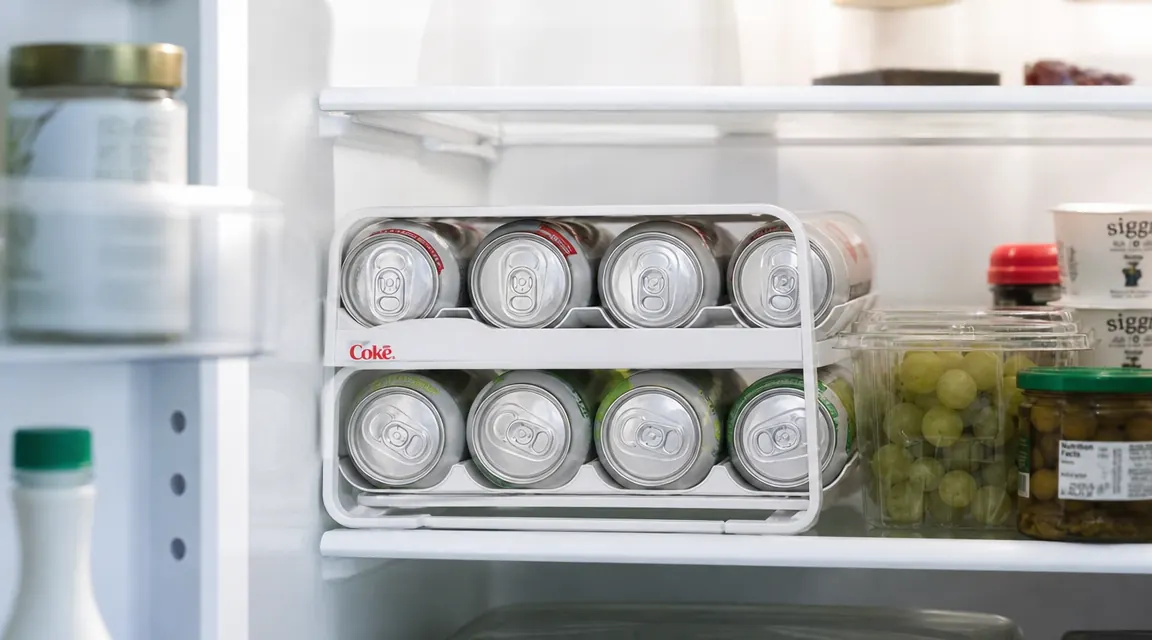
The refrigerator test was my real question. My fridge shelf is 17 inches deep and 20 inches wide on the main middle shelf. The dispenser fit width-wise without any issue. The depth is where things got interesting: the rack is only 15.7 inches long, so there is more than an inch of wasted shelf space behind it. Not a problem, but worth knowing if you are trying to squeeze in something else behind it.
Can Capacity and Which Sizes Actually Fit
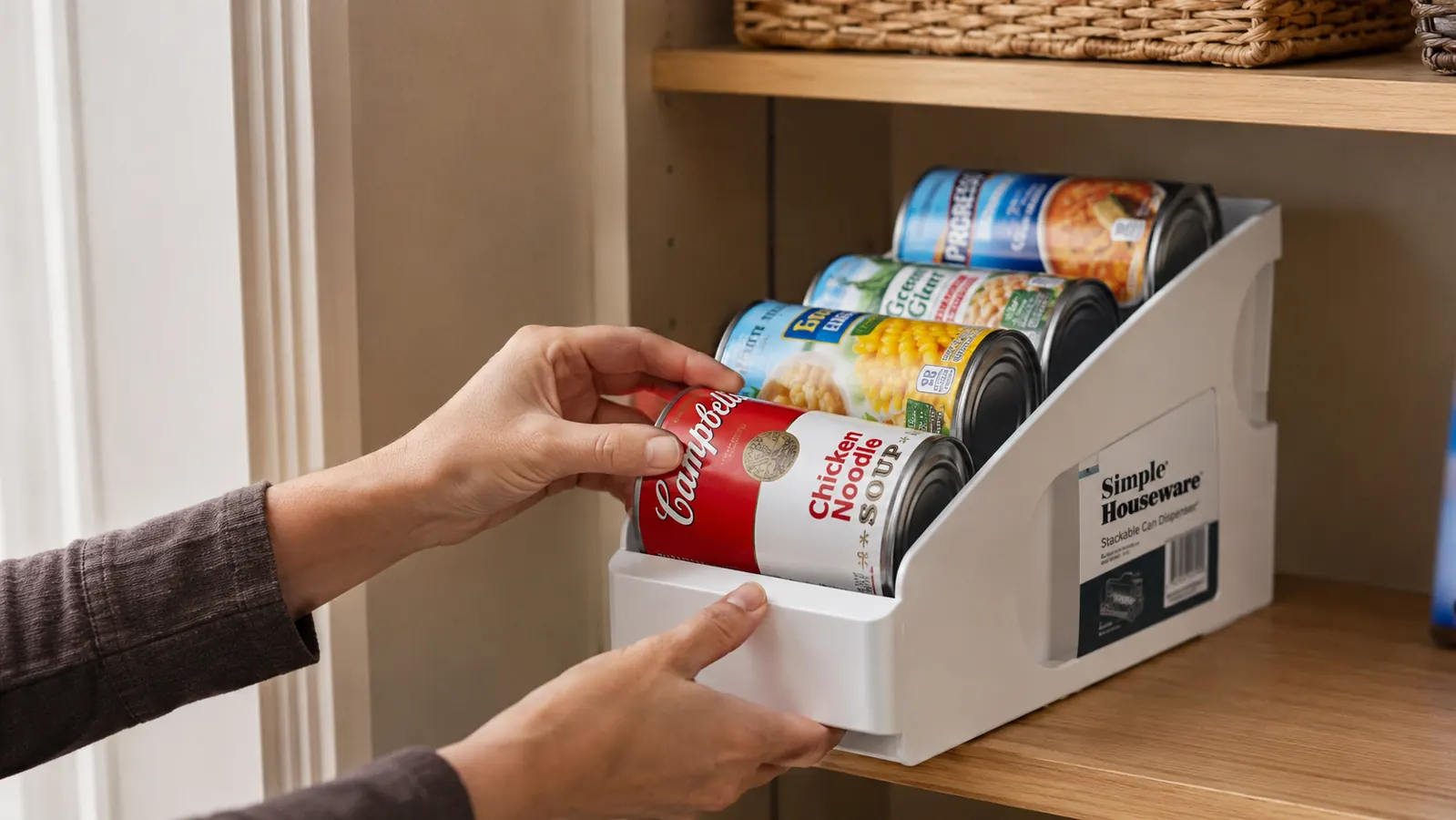
Each unit holds between 9 and 12 standard cans, depending on size. Here is what I tested: standard 15-oz soup cans (Campbell's, Great Value) load and roll without any hesitation. They slide along the wire rails and drop cleanly at the front. I never had a jam with these. Standard 14.5-oz cans (diced tomatoes, green beans) behaved identically. 12-oz soda cans are what the product is marketed for and they are flawless, rolling smoothly front to back with no wobble.
Where I hit friction: taller 28-oz cans (crushed tomatoes, the big soup cans) do not fit. The opening clearance on the rack is designed for cans under about 4.5 inches in diameter. Anything wider, like a standard 28-oz can at 4 inches across, technically fits through but rolls sluggishly and sometimes stops halfway down the track. I pulled those from the rack after a week and just stood them upright separately. The rack is not for large cans. Know that going in.
I also tested 8-oz tomato sauce cans, which are narrow. They rattled side to side between the wire rails and occasionally got sideways. Not a daily problem, but it happened twice in six months. If your whole pantry is stocked with those small cans, a different rack with tighter spacing would serve you better.

FIFO Rotation in Real Life
First-in first-out is the whole point of a gravity-feed dispenser. You load from the back. You take from the front. The oldest cans reach the front automatically. I tested this over three full restocks, starting in December, and it worked as described every time without any intervention from me.
The rear loading is the only part that requires any thought. The back of the unit is open, but you have to slightly tilt each new can to get it in over the cans already sitting there. It takes about three seconds per can once you get the motion down. I restocked 24 soup cans in about two minutes the third time I did it. Not annoying, just slightly less mindless than dropping things into a bin.
Three restocks over six months and I have never reached for a can that expired before I noticed. That is the whole argument for this rack, and it delivered.
What the FIFO system cannot fix: if you only keep four cans at a time, the rotation is barely relevant. This rack shines when you buy in bulk, keep 10 to 12 cans loaded, and restock from the back consistently. If you only keep a couple cans on hand, a single shelf riser does the same job for less money.
Rolling Mechanism and Jamming
The gravity-feed mechanism is just two parallel wire rails with a slight downward slope toward the front. There are no moving parts, no springs, nothing mechanical to break. A can rolls because gravity pulls it. This sounds obvious, but it matters: there is nothing to jam in the way a spring-loaded mechanism can. The only way cans stop rolling is if one gets wedged at an angle.
In six months, I had two jams. Both were 8-oz tomato sauce cans, which I already mentioned tend to wander sideways. With standard soup cans and soda cans, zero jams. The wire spacing seems to be calibrated for a pretty specific diameter range, and within that range it is reliable. Outside that range, you will have occasional issues.
The rolling is not silent. There is a soft metallic click when a can reaches the front stop. In a quiet kitchen late at night, I notice it. During normal hours, I do not. I have seen reviews that complain about this sound. I would call it a non-issue, but I do not have a sleeping baby in the kitchen either.
Stacking Stability and Build Quality
The units are white powder-coated wire. They feel solid when loaded. The coating has not chipped in six months of regular use. No rust, no flaking, no discoloration on the pantry or fridge units. The refrigerator unit does get condensation on the wire rails occasionally when I leave the fridge door open too long while cooking, but it dries completely and has not caused any surface problems.
Two-unit stacking is very stable. The interlocking feet keep the top unit from shifting even when I grab a can quickly from below. I did try a three-unit stack out of curiosity. It held, but I would not trust it with heavy cans on a pantry shelf that gets bumped. The footprint of the lower units does not increase when you add a third, which means the base-to-height ratio gets worse. Two units is the practical limit for me.
The end caps on the units are plastic, not wire. They lock the rod in place and provide the feet for the stacking notches. On one unit, one foot cap felt slightly loose out of the box. I pressed it firm and it has not moved since. Not a defect exactly, more of an assembly tolerance issue. I mention it because it startled me at first.
What I Liked
- Gravity-feed FIFO rotation actually works for standard 15-oz soup cans and 12-oz sodas
- No tools required, fully renter-friendly assembly
- Two-unit stacking is stable and the interlocking feet genuinely hold
- Powder coat held up through six months and refrigerator moisture with no rust or chipping
- Rear-loading design lets you restock without emptying the rack first
Where It Falls Short
- Large 28-oz cans roll sluggishly and sometimes stop mid-track
- Small 8-oz cans (narrow diameter) wander sideways and occasionally jam
- Three-unit stacking is possible but noticeably less stable
- The rolling click is audible in a quiet room, every single time a can moves
- Fits best on shelves 12 inches deep or more; 10-inch shelves work but feel cramped
Who This Is For
This rack is made for people who buy canned goods in bulk, specifically standard 15-oz soup cans or 12-oz sodas, and want them off a flat shelf where they roll and pile. If you do a monthly grocery run and come home with 12 to 24 cans at a time, this setup pays for itself in frustration-savings within the first week. It also works well for anyone who has a narrow pantry and needs to stop guessing what is at the back: load from the rear, take from the front, repeat.
Renters and apartment dwellers will appreciate that there are no tools involved and no permanent changes to any surface. You can move it, reposition it, or return it without leaving a mark. If you are in a place with 12-inch or deeper pantry shelves, it will fit. If your pantry shelves are shallower than that, measure first.
Who Should Skip It
Skip this if your canned goods are mostly large-format cans, specialty sizes, or cans that vary wildly in diameter. The rack is calibrated for a specific size range, and cans outside that range either do not fit or roll poorly. Skip it also if you only keep three or four cans at a time. A simple stepped shelf riser does the same job for less and takes up less space. And skip the three-unit stack entirely unless your shelf is secured and you are only running lighter 12-oz cans.
If you buy soup cans by the case, you already need this
The Simple Houseware 2-pack handles standard 15-oz cans and 12-oz sodas reliably. Check the current price and availability on Amazon before your next grocery run.
Amazon Check Today's Price on Amazon →