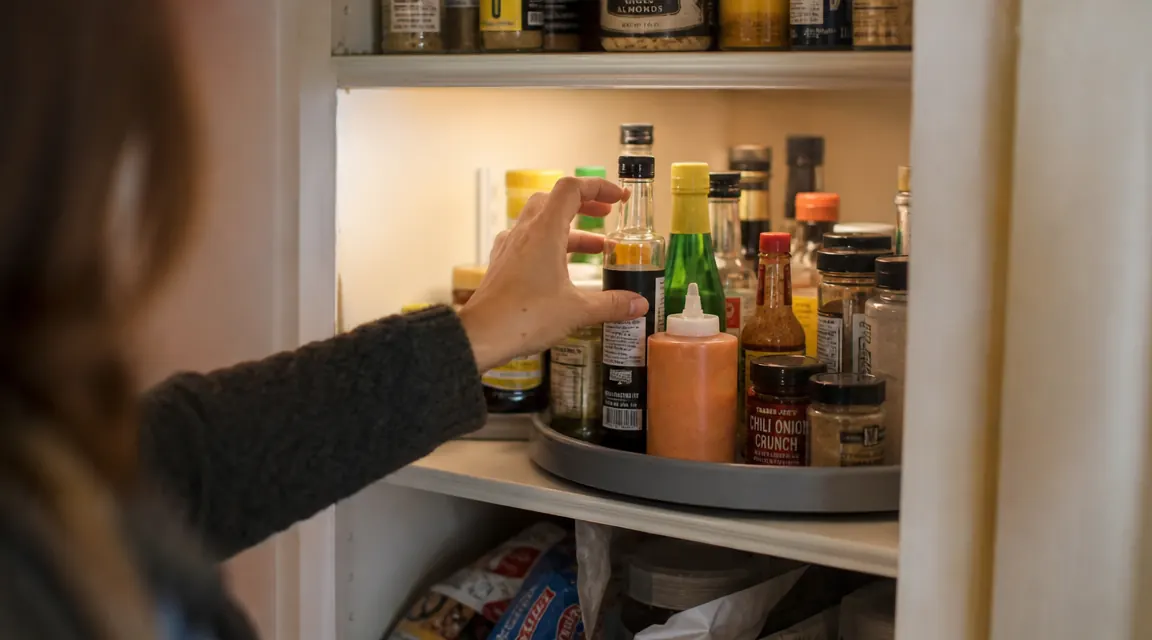
I have three Copco Non-Skid Turntables in my house right now. One in the pantry closet, one under the bathroom sink, one on the lazy shelf above the stove where the oils and vinegars live. I did not buy them all at once. I bought the first one, got annoyed by two specific things nobody warned me about, figured out the workarounds, bought two more. That buying pattern tells you the honest story better than any star rating: good enough to buy again, imperfect enough that you will hit a wall the first week if you do not know what to expect.
This is the review I wish existed before I ordered. Not the listing. Not the five-star posts from people who spun it once and were delighted. The breakdown from someone who has loaded, cleaned, cursed at, and continued using this specific turntable for long enough to know where it actually earns its keep and where it does not.
The Quick Verdict
The non-skid base is real and it works. But there are two specific gotchas, one around edge clearance and one around cleaning, that the listing photo actively hides. Know them going in and this is an excellent buy.
Amazon Check Today's Price →If your cabinet is deeper than 14 inches, this fixes it today.
The Copco 12-inch Non-Skid Turntable has 6,700-plus reviews at 4.8 stars. The catches are real but workable. Check today's price before you decide.
Amazon Check Today's Price on Amazon →How I've Used It
Pantry closet, second shelf up from the floor. Shelf is 16 inches deep, 24 inches wide, painted MDF. The Copco sits about two inches from the back wall, which gives the rim about two inches of clearance to complete a full rotation. That clearance is tight. Anything closer to the back wall and you get a partial-spin situation where the turntable bumps the wall before coming around. I learned that on my second day of using it, after repositioning twice before I got the placement right. The sweet spot is center-of-shelf, not shoved to the back the way most people instinctively stack things.
Under the bathroom sink: solid vinyl floor, no pedestal pipe to work around, cabinet is 18 inches deep. The turntable sits on the right side of the cabinet and holds hair oil, two kinds of leave-in conditioner, a bottle of rubbing alcohol, and a spray bottle of surface cleaner. That is five items, total load maybe five to six pounds, and the spin is smooth every single time. No wobble, no drift. Vinyl floor grips the non-skid base as cleanly as laminate does. This is where the turntable earns zero complaints from me.
The pantry load is heavier and messier. Hot sauce, two olive oils of different heights, a tall plastic bottle of white vinegar, a wide-bottom jar of almond butter, and a small squeeze bottle of sriracha that rolls around constantly without the turntable to corral it. That sriracha bottle is the item that taught me the edge problem. More on that below.
The Catch Nobody Puts in Their Review: Things Fall Off the Edge
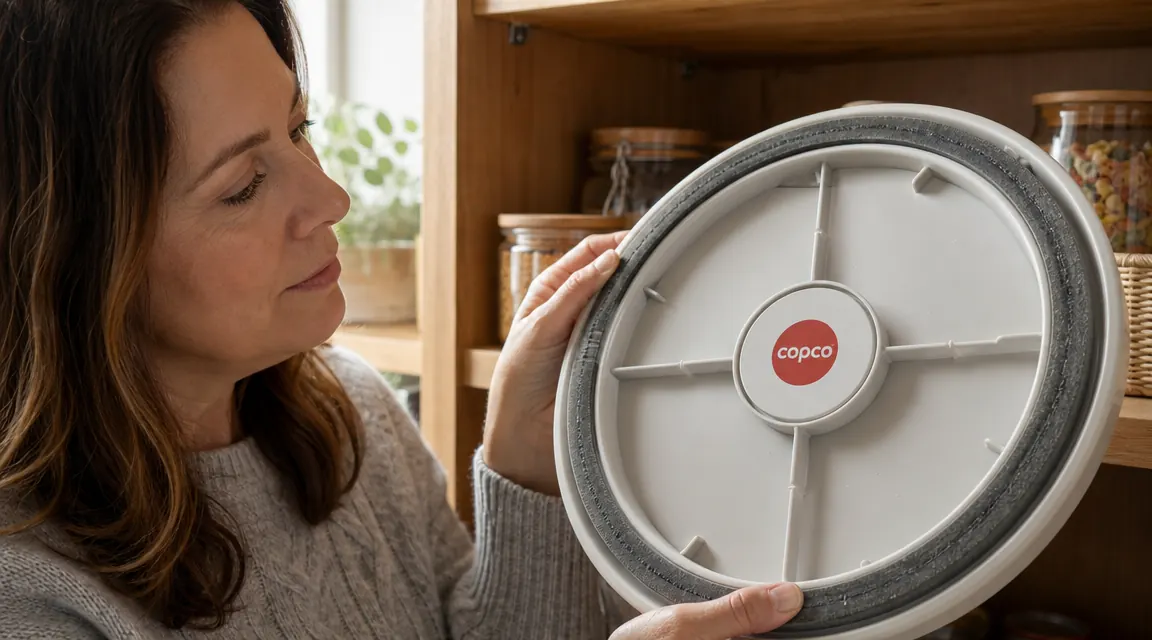
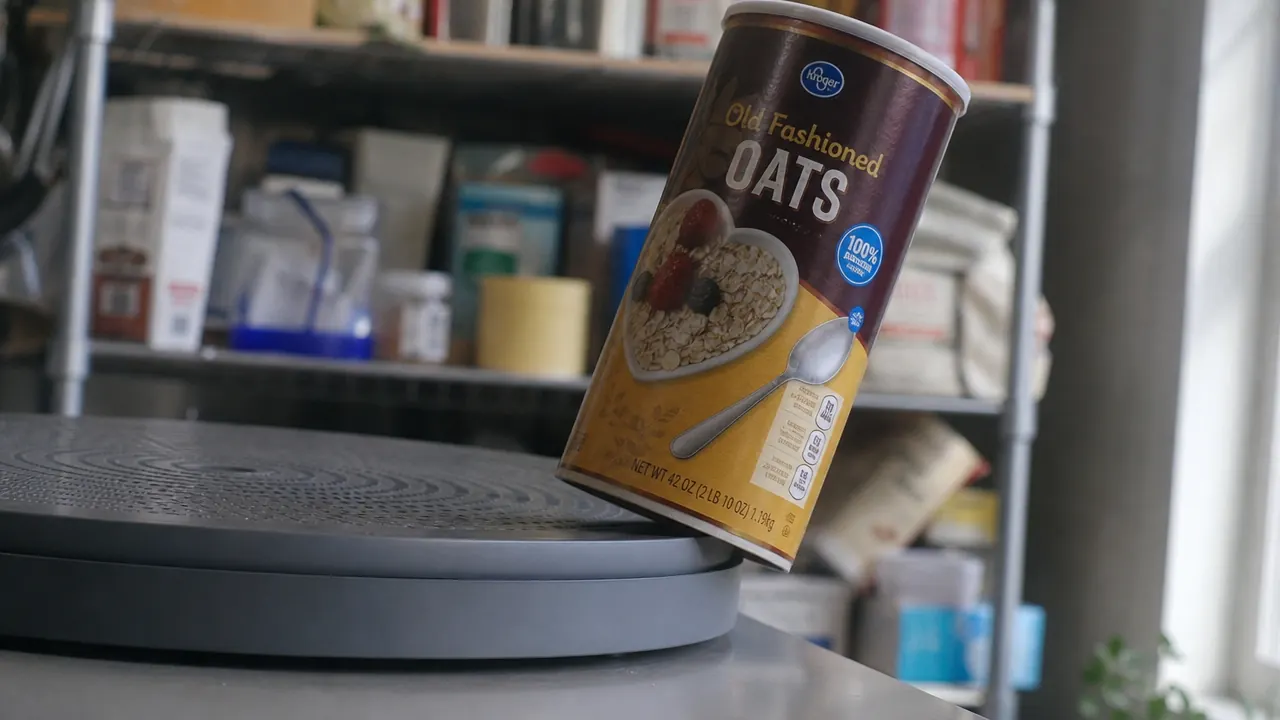
The Copco turntable has a completely smooth, flat top surface. No raised lip. No rim. No textured grip ring on the top. That is fine for bottles with wide flat bases, which sit dead center and do not move during a spin. It is a real problem for anything with a narrow base, a tapered body, or a rounded bottom. The sriracha squeeze bottle has a narrow tapered cap end and a slightly curved base. When I give the turntable a firm spin to bring it around fast, centrifugal force pushes that bottle outward toward the edge. On a slow spin, it stays put. On a quick spin, it slides two to three inches toward the outer rim. Twice it has gone over the edge entirely. Nothing broke because it is plastic, but a glass bottle would be a different story.
This is not a defect. This is physics. The listing photo shows matching glass spice bottles, all flat-bottomed, all roughly the same weight and height, arranged like they were placed by a set designer. Real kitchens have squeeze bottles, conical spice containers, short wide jars next to tall thin bottles. If your collection is that mismatched, you will deal with the edge-slide problem and you should know it before you order.
The fix is simple: do not give it a fast spin if you have any tapered or lightweight items on it. Use a slow push. Or corral the oddly-shaped items in a small open-top bin that sits on the turntable. I put a four-inch round ramekin in the center of my pantry turntable and that is where the sriracha bottle lives now. No more edge drama. But the turntable itself does not solve the problem out of the box.
Cleaning the Non-Skid Surface: The Part the Listing Photos Hide
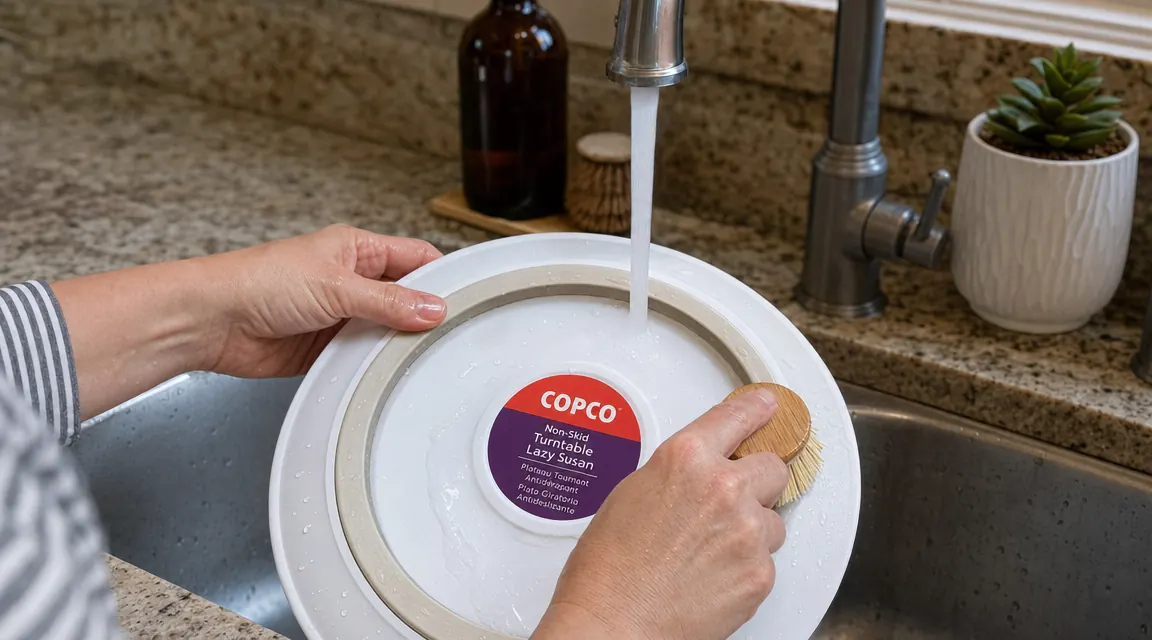
The non-skid ring on the underside of the Copco is a textured rubber strip that runs around the perimeter of the base. The texture is what creates the grip. It is also what collects grime. After about three weeks of sitting on a pantry shelf, mine had collected a thin ring of dust, cooking vapor residue, and one olive oil drip that had made it down the bottle and onto the shelf surface. The rubber texture grabbed all of it. Under the bathroom sink, the ring collected a layer of fine talc-like powder from dry shampoo within two weeks.
Cleaning it is not hard, but it is more involved than wiping a flat surface. You have to twist the top counterclockwise to separate it from the base, then use a damp cloth or a small brush to get into the rubber texture grooves. A toothbrush works well. The rubber itself is durable, it does not tear or harden with repeated washing, but you have to take the turntable apart to do a thorough clean. If you are someone who wipes down shelves and calls it done, you will end up with a grimy ring under there that nobody sees but you know is there.
The top surface cleans in thirty seconds. Warm soapy cloth, done. It is only the base ring that requires effort. Plan on disassembling it once a month if you keep it in an area with cooking residue or product mist. The good news is the assembly and disassembly process is about ten seconds each way. Copco designed the separation mechanism well.
The rubber grip texture that makes this turntable actually stay put is the same texture that collects grime in a working kitchen. The fix is a monthly disassembly and a toothbrush. That is a fair tradeoff, but you should know it going in.
What the 4.8-Star Rating Does Not Show You
Most of the one-star and two-star reviews on this product fall into three categories. The first is uneven shelf surface. The Copco sits flat on a flat surface. If your shelf has a warp, a ridge from a shelf liner overlap, or a lip at the front edge, the turntable will sit unevenly and wobble during use. This is not a turntable defect, it is a shelf condition issue, but if your shelves are old or you have a shelf liner with a folded-over edge, check before you buy. A thin rubber shelf liner under the turntable usually flattens the problem out.
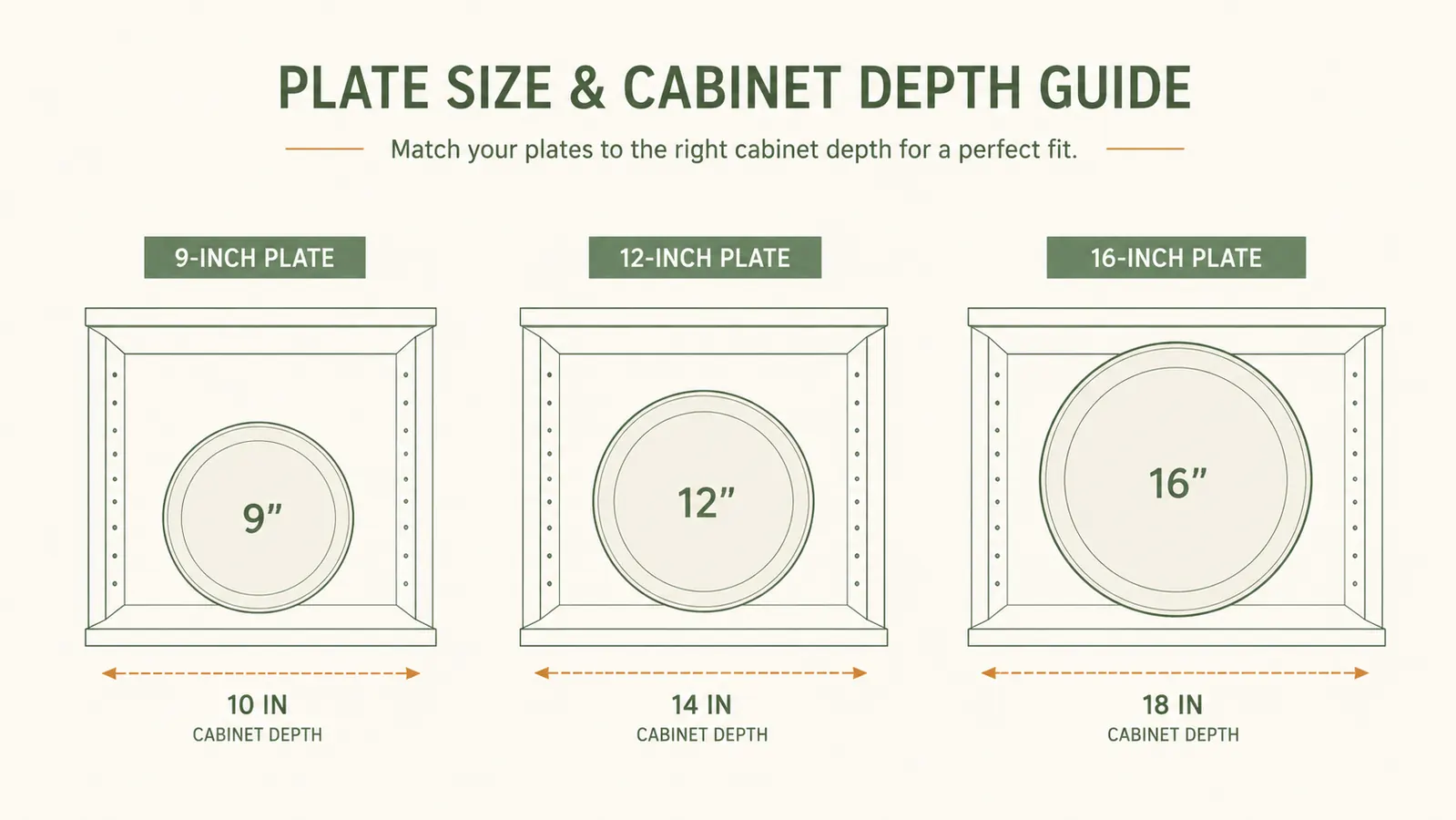
The second complaint category is size. People buy the 12-inch version for a cabinet that is 11 inches deep and then wonder why it will not spin all the way around. The math is simple: the turntable needs more clearance than its own radius on each side. For a 12-inch turntable, you need the rear of the disk to sit at least two inches from the back wall for a clean full rotation, meaning your cabinet needs to be at least 14 inches deep measured from front to back. Anything less and you get partial rotation. The listing does not explain this. It shows the turntable sitting inside a cabinet and spins it, but does not tell you the minimum depth requirement.
The third category is the edge-slide issue I described earlier. Most of those reviewers say the turntable is defective because their bottles fell off. The turntable is working as designed. The design just does not include an edge lip. Knowing this going in, you can plan for it. Not knowing it, you feel deceived.
Grip on Different Shelf Materials: The Real Test
I have personally tested this turntable on five distinct shelf surfaces across my three units and two previous rentals. Smooth laminate: excellent grip, zero drift. Painted MDF (my current pantry): excellent grip. Vinyl floor surface (under sink): excellent grip. Textured rubber shelf liner: excellent grip, noticeably firmer than without the liner, almost too grippy, meaning the turntable does not spin quite as freely if the liner is very textured. Bare coated wire rack (like a freestanding wire pantry shelf): grip is roughly 60 percent. The rubber ring catches on the wire edges somewhat, so the turntable sits stable but you will feel micro-bumps in the spin as the base passes over each wire.
If you have coated wire shelving throughout your kitchen, this turntable still works, but the spin experience is not the smooth glide you get on solid shelving. For wire shelves, a turntable with a solid flat base rather than a textured rubber ring would actually perform better. The Copco's grip advantage is specifically about not sliding on smooth flat surfaces. On wire, that advantage mostly disappears and you are left with a so-so spin.
Getting the Size Right: The Decision the Listing Does Not Help You Make
Copco makes this turntable in at least three sizes: 9-inch, 12-inch, and 16-inch. The 12-inch is the most-purchased, which is why it has the most reviews, but it is not automatically the right choice for your space. Here is how I think about the sizing decision based on testing all three in different locations.
The 9-inch version belongs in fridge door shelves, narrow spice cabinets (under 12 inches wide), and any shelf where you want to organize small items without taking up the whole surface. I use the 9-inch in the medicine cabinet above the bathroom vanity, which is 10 inches deep. The 9-inch spins a full 360 at that depth with about half an inch of clearance on each side. It holds eyedrops, a thermometer, two small medicine bottles, and a travel-size deodorant. Perfect fit, would not put a 12-inch there.
The 12-inch is the standard pick for kitchen cabinets 14 inches deep or greater and for under-sink spaces. It holds enough to matter without dominating the whole shelf. The 16-inch is for a pantry or lower cabinet where you want to organize a large volume of cans, jars, or bottles and you have both the depth (at least 18 inches) and the width (at least 18 inches) to accommodate it. Buying the 12-inch for a space that needs a 16-inch is the most common sizing mistake I see in the complaints. More surface area means items loaded toward the back are further from the edge, which reduces the edge-slide risk at the same time.
What I Liked
- Non-skid rubber ring genuinely prevents drift on laminate, painted MDF, and vinyl surfaces
- Top and base twist apart in under ten seconds for cleaning without any tools
- Spins smoothly in both directions with no ratchet points or directional preference
- Lightweight at under half a pound, does not add meaningful height burden to overloaded shelves
- Available in three sizes so you can match actual cabinet depth without guessing
- Renter-friendly, no installation, no adhesive, no damage to shelf surface
Where It Falls Short
- Smooth flat top surface gives no edge protection, narrow-base or curved-bottom items can slide off during a fast spin
- Textured rubber base ring collects dust, oil vapor, and product residue and requires a brush to clean properly
- Performance drops noticeably on coated wire shelving versus solid flat surfaces
- Minimum cabinet depth of 14 inches required for full rotation is not stated on the listing
- No weight specification published, leaves buyers guessing on load limits for heavier pantry loads
Who This Is For
This turntable earns its spot if you have at least one cabinet or storage area that is deeper than 14 inches and where items get lost to the back row. Pantry closets, upper kitchen cabinets, under-sink bathroom storage, medicine cabinets with enough depth, the lower shelf of a freestanding bookshelf you use for storage. If your items are mostly flat-bottomed glass jars, bottles, or cans, you will have zero issues with the edge-slide problem and this is simply the right buy. It costs less than a single meal out, requires no installation, and solves a problem that most people have tolerated for years because they did not know a ten-dollar fix existed.
If you are in a rental and cannot modify any surfaces, this is one of the few organizers that leaves zero trace. No adhesive residue, no shelf damage, no marks. Lift it off and it looks like it was never there. That matters a lot if your security deposit is on the line.
Who Should Skip It
Skip it if your shelves are predominantly coated wire. The grip advantage that makes this product worth the modest price premium over a no-name version is essentially eliminated on wire shelving, and the textured rubber ring can catch slightly on the wire edges during a spin. A simple plastic tray or a turntable with a smooth plastic base would give you a better spin experience on wire without the grip complexity.
Also skip the 12-inch specifically if your cabinet is under 14 inches deep. This is not a maybe situation. I measured a rental kitchen cabinet that was 12 inches deep, put a 12-inch turntable in it to test, and got approximately 200 degrees of rotation before the back edge hit the wall. Usable in a limited way, but not the solution you are paying for. Get the 9-inch instead and get a full spin.
If most of what you are storing has a narrow, tapered, or rounded base and you are not willing to add a small inner container to corral those items, this is not the right organizer for your load. A turntable with a raised rim or a bin-style insert would serve you better. The Copco is an open flat disk. It keeps things accessible, it does not keep things contained.
Know the catches. Still a smart buy if your cabinet is 14 inches or deeper.
The Copco 12-inch Non-Skid Turntable has 6,700-plus reviews at 4.8 stars and the grip performance is genuinely different from cheaper no-name versions. Check today's price to see if it fits your budget.
Amazon Check Today's Price on Amazon →